
The Cutting Edge of Sustainability: How Industrial Blades Power PET Bottle Recycling
Introduction: The Billion-Bottle Challenge
Polyethylene Terephthalate (PET) plastic bottles are an omnipresent feature of modern life, from water bottles to soft drinks and food packaging. While incredibly useful, their sheer volume presents a massive environmental challenge. The solution? Industrial PET bottle recycling.
This process is a vital cornerstone of the circular economy, transforming discarded waste into valuable raw material—but it's not magic. It's a complex industrial operation where precision and efficiency are everything. At the heart of this transformation is one critical component: high-quality industrial blades.
At Khosla Tools, we specialize in manufacturing the precision cutting tools that keep the world's most demanding industrial processes running smoothly, ensuring your recycling line stays profitable and efficient.
2025 Industry Outlook: Trends Shaping PET Recycling
The recycling industry is evolving rapidly. As we move through 2025, new regulations and market demands are changing how plants operate. Here are the top three trends and how the right blades help you stay ahead.
1. The Rush for "Food-Grade" rPET
The Trend: With major beverage brands pledging to use 25-50% recycled content in their bottles, the demand for high-purity, food-grade rPET pellets is skyrocketing.
- The Challenge: "Fines" (plastic dust) are the enemy. If your shredder creates too much dust, it contaminates the wash water and results in yield loss—plastic that literally washes down the drain.
- The Khosla Solution: Our Granulator Knives are engineered with precise cutting geometries. By delivering a clean "scissor cut" rather than smashing the plastic, we drastically reduce dust generation, ensuring higher yields of pure, valuable flakes.
2. The Challenge of "Lightweighting"
The Trend: To save plastic, manufacturers are making water bottles thinner and lighter than ever before.
- The Challenge: Thin plastic is notoriously difficult to shred. Dull or low-quality blades tend to "chew" or fold these thin bottles rather than cutting them, leading to machine jams and inconsistent flake sizes.
- The Khosla Solution: We use premium High-Carbon, High-Chrome (D2) and specialized alloy steels that hold a razor-sharp edge longer. This allows for the tight blade gaps necessary to cleanly slice through even the thinnest micron-level plastics without folding.
3. Energy Efficiency & Cost Control
The Trend: With rising energy costs, recycling plants are under immense pressure to lower their kWh (kilowatt-hour) per ton of processing.
- The Challenge: A blunt blade forces the shredder motor to work twice as hard to process the same amount of material, spiking your electricity bill.
- The Khosla Solution: Sharpness equals efficiency. Our heat-treatment processes ensure blades stay sharp for extended runs, reducing the mechanical load on your shredder and lowering your energy consumption per ton.
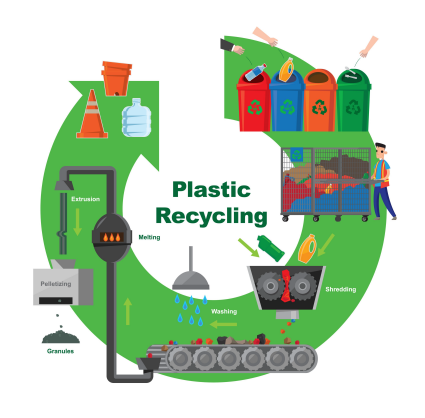
The PET Bottle Recycling Process: Where the Blade Meets the Bottle
While trends change, the core process remains reliant on mechanical reduction. Here is where our blades play a pivotal role in your daily operations:
1. Collection and Sorting
Bottles are collected and sorted to separate PET from contaminants like PVC or metal caps.
2. Washing and Pre-Treatment
Bottles are washed to remove labels and adhesives. This purity is essential before the blades touch the plastic.
3. Volume Reduction (The Critical Step)
This is the most crucial mechanical step, performed by heavy-duty industrial shredders and granulators.
Why Khosla Tools Blades Matter Here:
- Uniform Flake Size: Consistent cuts are vital for the melting process. Irregular flakes cause uneven melting, leading to black spots in the final rPET pellets.
- Reduced Downtime: PET is abrasive. Inferior blades chip and dull quickly, forcing you to stop production for changes. Our blades are built for maximum uptime.
4. Separation & Pelletizing
The flakes are separated from cap material via flotation, dried, and melted. Finally, Pelletizer Knives cut the extruded strands into uniform pellets, ready to become new bottles.
Why Blade Quality is a Business Decision
For recycling plant operators, choosing the right industrial blade impacts the bottom line.
| Factor | Low-Quality Blade Impact | Khosla Tools High-Performance Blade Benefit |
|---|---|---|
| Yield (Output) | High dust/fines creation (material loss). | Precision Cutting for maximum flake yield. |
| Operating Costs | High energy use & frequent replacements. | Lower Energy Costs & extended service life. |
| Material Handling | Jams when processing thin bottles. | Superior Sharpness handles lightweight plastics easily. |
| Durability | Prone to chipping from contaminants. | Tough Alloys resist shock and wear. |
Conclusion: Partnering for a Circular Future
The PET bottle recycling industry is essential for a sustainable future, but it requires robust machinery to handle the millions of tons of plastic waste generated annually.
At Khosla Tools, we don't just sell shredder blades and granulator knives; we provide the engineering solutions that help you adapt to modern recycling challenges—from processing thinner bottles to meeting food-grade standards.
Don't let dull blades cut into your profits.
Ready to Optimize Your Recycling Line?
Contact Khosla Tools today to discuss our custom-engineered industrial blades for plastic, rubber, and waste recycling applications. Let's make your process sharper, cleaner, and more profitable.